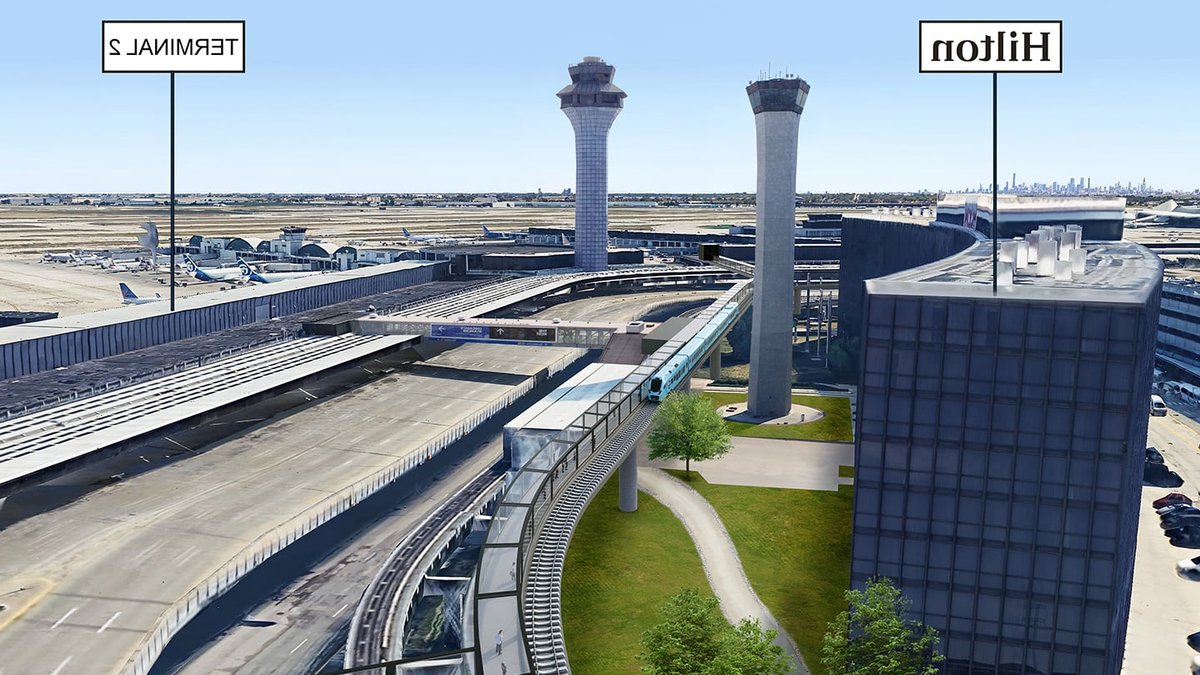
The proposed 15‑minute O’Hare express train aims to link downtown with the airport’s Terminal 2 in a single, swift ride, promising a new level of convenience for travelers.
Plan Overview
Business and civic leaders unveiled the project, dubbed O’Hare Flyer, as the first airport express train in the United States. The service would run on a dedicated track with departures every 15 minutes, using a whisper‑quiet battery‑electric train.
According to the founders, the train will feature concierge‑level service, clean interiors, comfortable seats and luggage racks in each car. It will recharge at the downtown station near the Old Post Office and again at the O’Hare terminal.
Related: Disney’s Lakeshore Lodge Unveils Rooms Opening 2027
“O’Hare Flyer will connect our world class downtown with our world class airport in 15 minutes,” said founder and CEO Dave Lundy. “This is a first‑of‑its‑kind express train in the U.S. and will give Chicago a safe, reliable, world‑class rider experience on a fast, whisper‑quiet battery‑electric train.”
Funding and Partnerships
The initiative is privately financed and does not rely on subsidies for regional transit agencies such as the CTA or Metra. Two of the Big Four accounting and consulting firms are among the supporters.
Mark Walbrun, founder and chief engineering officer, added, “This is an important first for Chicago and for the country. O’Hare Flyer will build on Chicago’s heritage as America’s rail capital and center of innovation.”
Freight rail rights‑of‑way owned by CSX, Canadian National and Union Pacific will host the line. A Letter of Intent with CSX has been signed, and negotiations continue with the other carriers.
Related: Travelers often overlook credit card risks
“CSX is pleased to work with the O’Hare Flyer team to support a safe and reliable transportation option for Chicago travelers,” said Andy Daly, CSX senior director of passenger operations.
The project’s leaders emphasize local job creation. Mike Macellaio, president of the Chicago and Cook County Building and Construction Trades Council, said an MOU is an important first step toward a Project Labor Agreement that will help ensure unionized workers build the line.
Projected Impact
Supporters argue the express train could act as “economic development rocket fuel,” attracting businesses and visitors. Kristi Lafleur, co‑founder, noted that a quiet, pollution‑free electric train would bolster the region’s appeal.


